
The Forgotten Cordette Watch Bracelet
The Forgotten Cordette Watch Bracelet
The history of the corded bracelet found on tiny lugless watches — and how I rebuilt one for a vintage Bulova.
Some vintage watches arrive with an obvious problem.
A cracked crystal. A dead movement. A missing crown.
This little Bulova was different. The watch itself was charming, but the bracelet was clearly at the end of its life.
The original black cord had frayed badly where it met the metal fittings, and one end was starting to come apart completely. The bracelet hardware was still there, but the material holding everything together had given up.
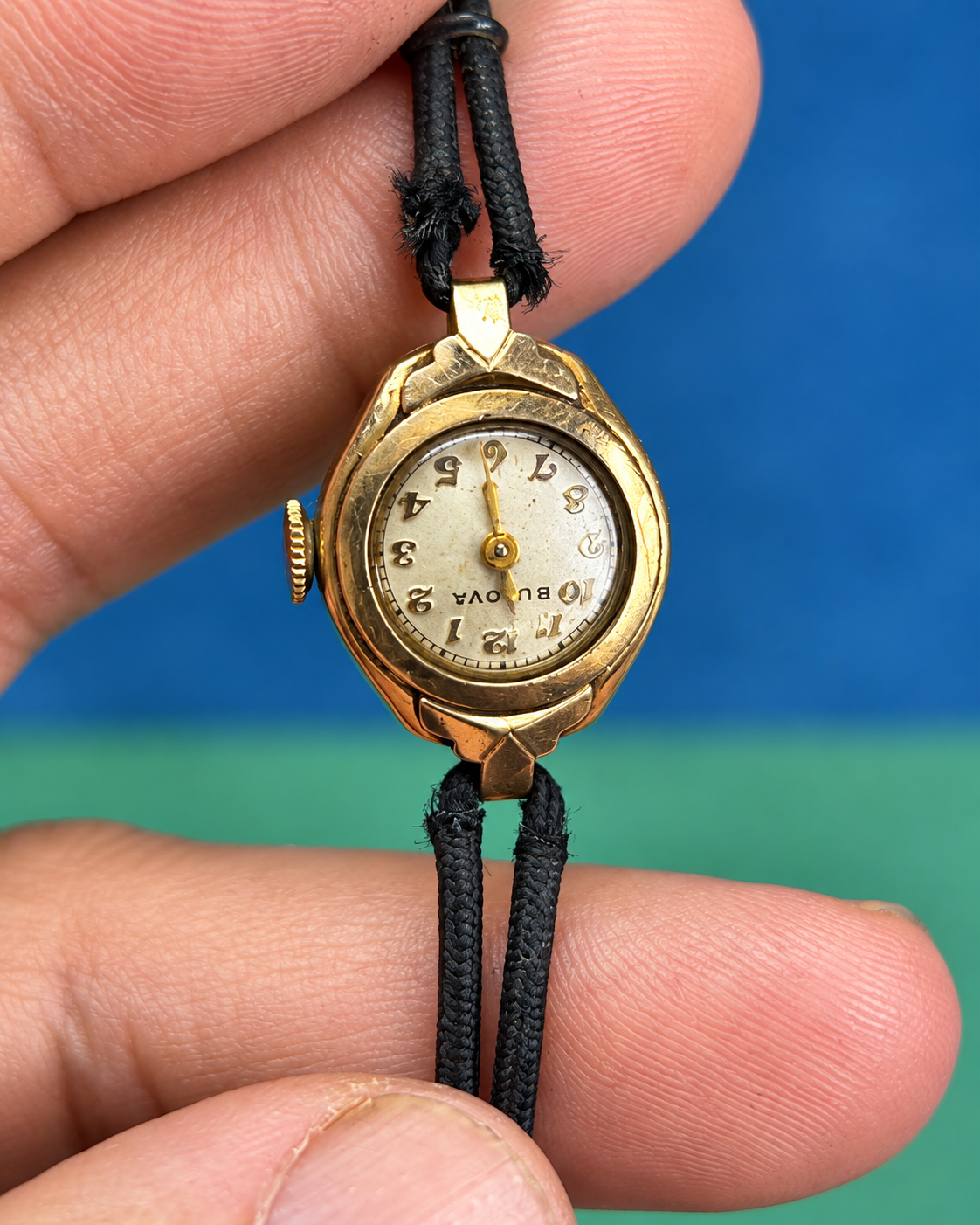
At first glance, it looked like a strange little strap problem.
It turned into a much more interesting rabbit hole.
A Bracelet Made for Tiny Watches
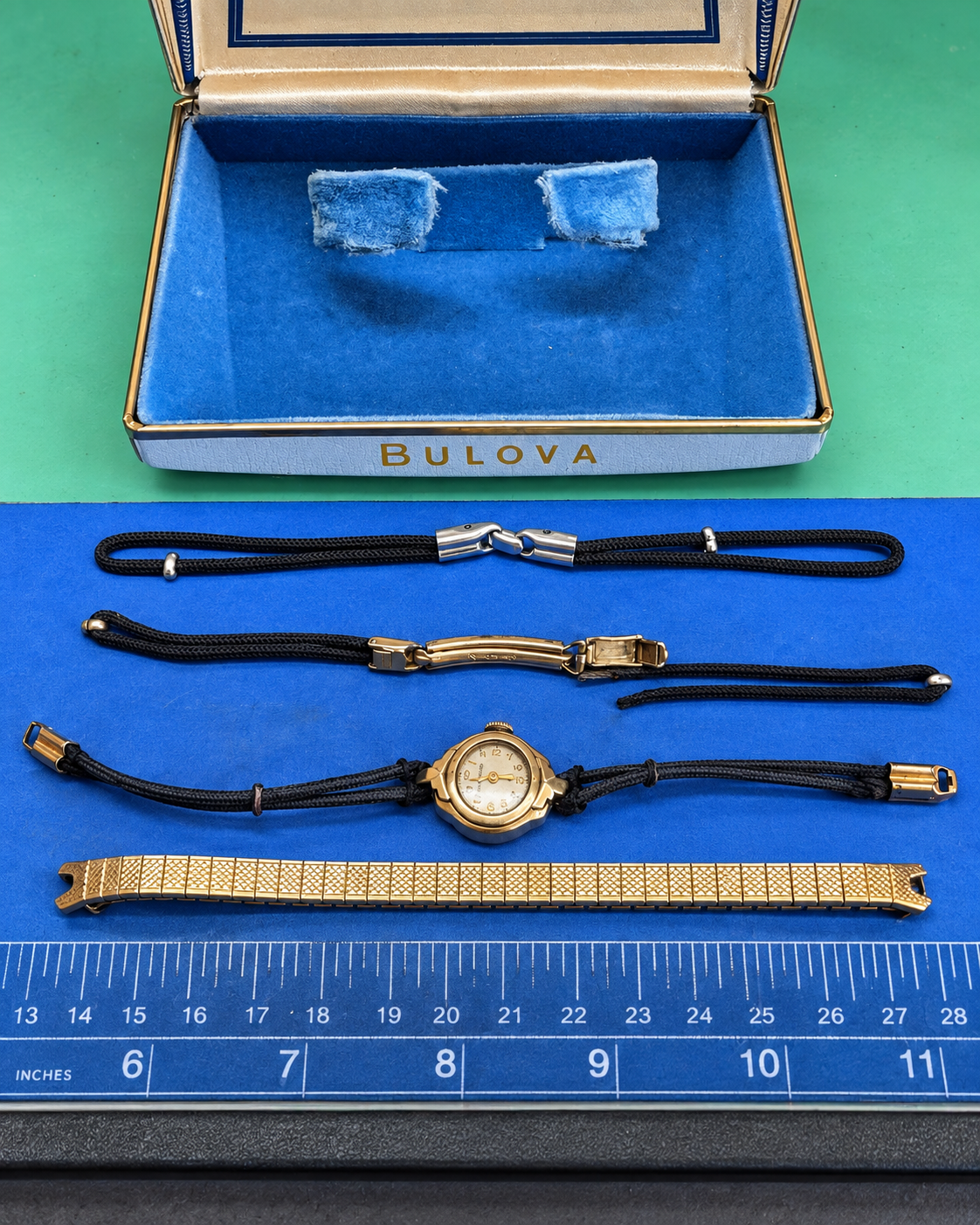
These corded bracelets were designed for very small ladies’ watches, especially cases with fixed or lugless attachment points.
Instead of a conventional leather strap held on by spring bars, the bracelet uses paired lengths of cord that pass through or around the watch case and connect to small metal fittings and a clasp.
The result is delicate, lightweight, and much more jewelry-like than a normal watch strap.
On a tiny watch, that matters.
The cord almost disappears visually, leaving the watch case floating between two narrow black lines. It makes the watch feel less like a miniature men’s wristwatch and more like a piece of jewelry that happens to tell time.
The Problem With Surviving Examples
The watches often survive.
The cord usually doesn’t.
After decades of wear, the material can dry out, fray, stretch, stain, or simply break at the points where it is folded into the metal fittings.
That was exactly what happened here.
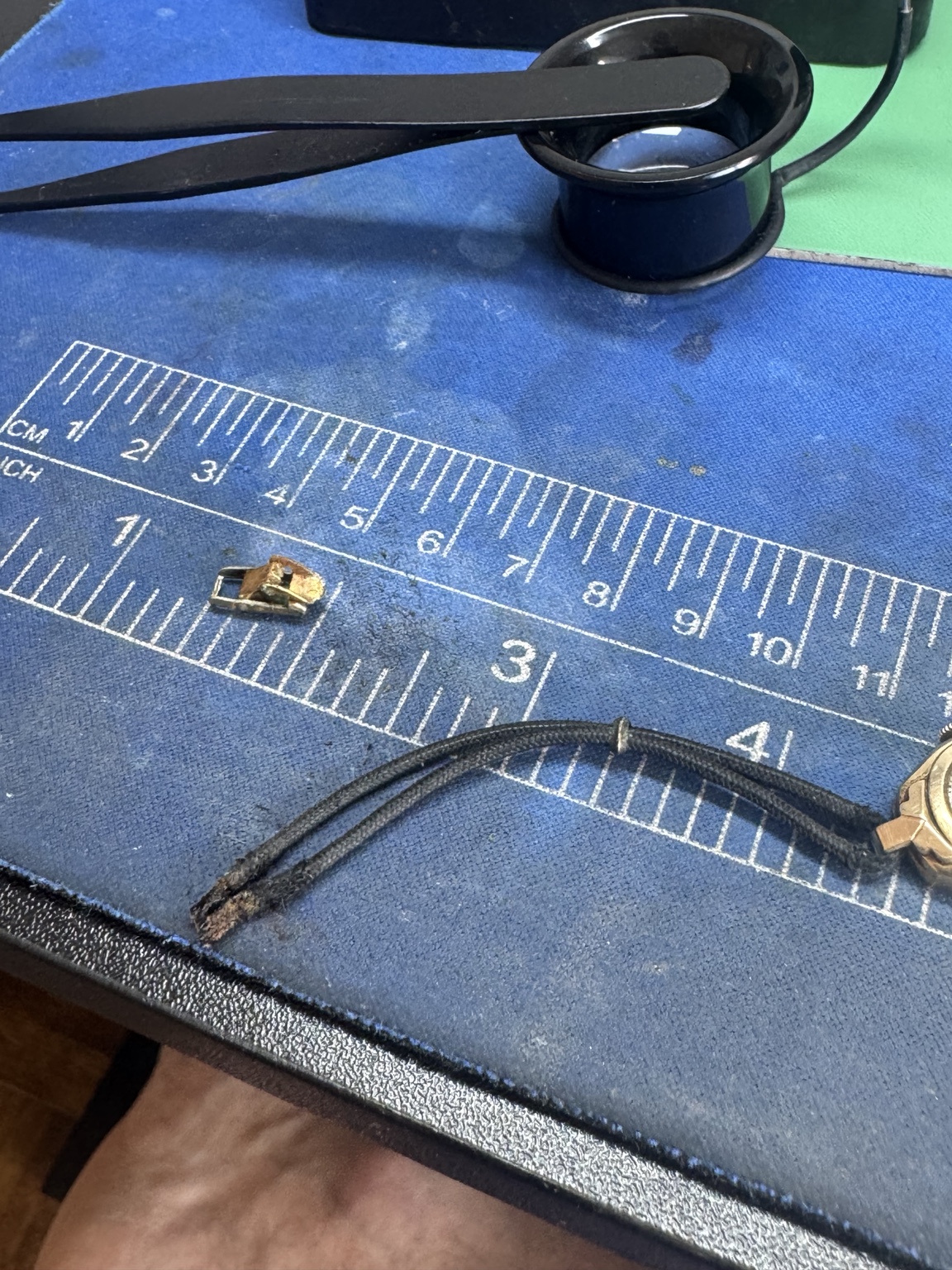
Once the old cord was removed, the construction became much easier to understand. The decorative metal hardware was still perfectly usable. What had failed was the replaceable part.
That is the important thing about these bracelets: a damaged cord does not necessarily mean the bracelet — or the watch — is finished.
If the original clasp and fittings survive, much of the bracelet can be rebuilt.
Taking It Apart
The first step was simply figuring out how the original bracelet had been assembled.
The old cord had been folded, doubled, and secured into small metal end fittings. Tiny metal loops kept the paired cords aligned, while the clasp and terminal pieces did the real mechanical work.
Once I had the bracelet apart, it became less mysterious.
It was basically a very clever piece of jewelry hardware built around a replaceable textile component.
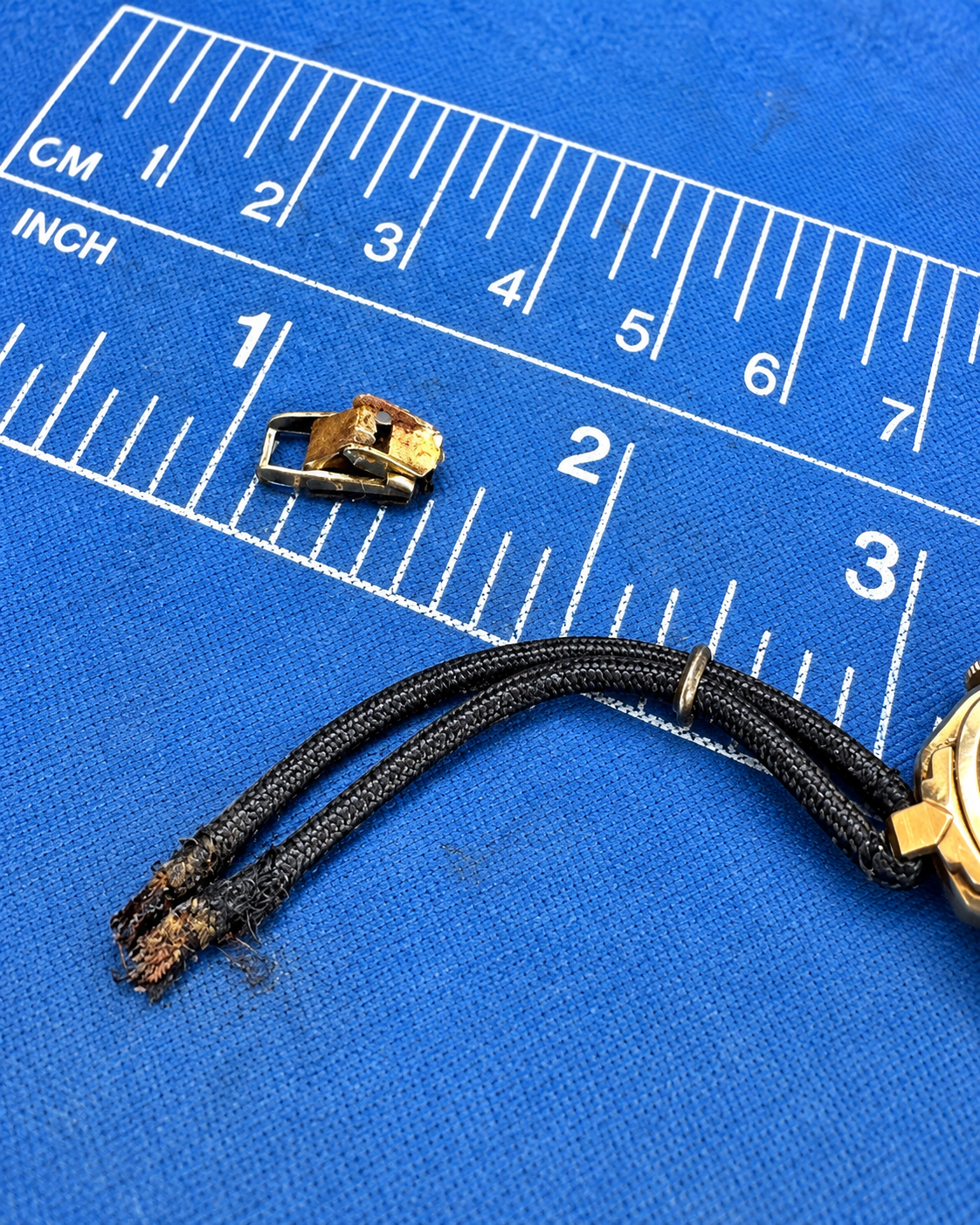
That also explains why these old watches can be difficult to deal with today. You cannot always solve the problem by buying a modern strap in the correct width.
There may not be a conventional lug width at all.
You need to work with the original hardware.
Finding Replacement Cord
The next question was whether suitable replacement material still existed.
Fortunately, watch and bracelet cord is still available.
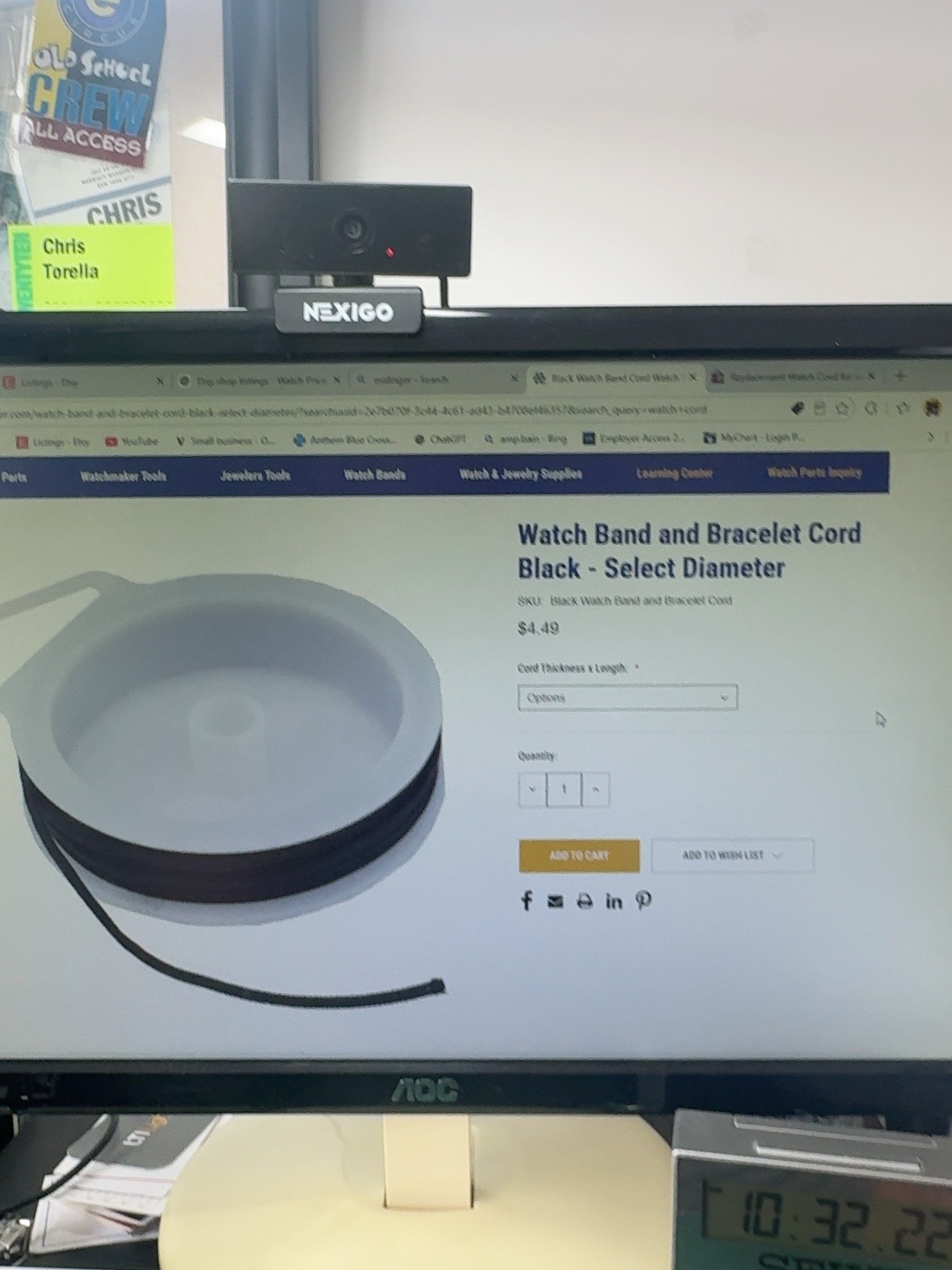
The challenge was not finding cord. It was choosing the right diameter and figuring out how to reproduce the original fit cleanly.
The new material had to be thin enough to pass through the original fittings, but substantial enough to look appropriate on the watch.
Too thick and the bracelet would look clumsy.
Too thin and it would lose the elegant appearance that made these bracelets interesting in the first place.
Rebuilding the Bracelet
The rebuild itself was surprisingly simple once the construction made sense.
The new cord was cut, doubled, threaded through the original hardware, and fitted back to the watch.
The most important part was sizing.
These bracelets were not really one size fits all. They were meant to be fitted to a wrist, and once cut, the finished length becomes fairly specific.
That means you have to think before trimming anything.
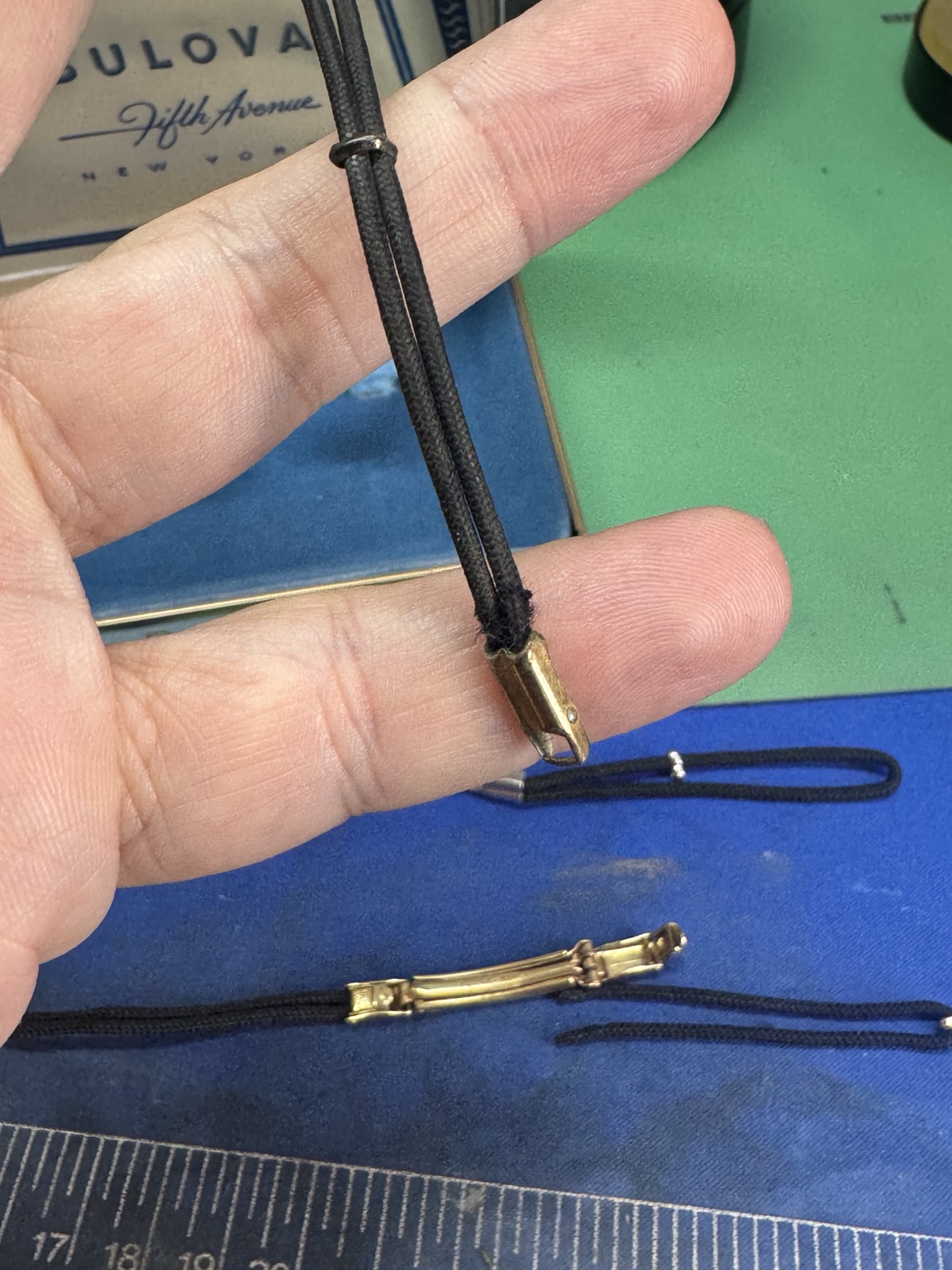
I also learned, as usual, that tiny jewelry hardware has a sense of humor. It is very easy to install a keeper, end piece, or clasp component in the wrong orientation and only notice once everything is almost finished.
That is part of the fun.
Take it apart.
Do it again.
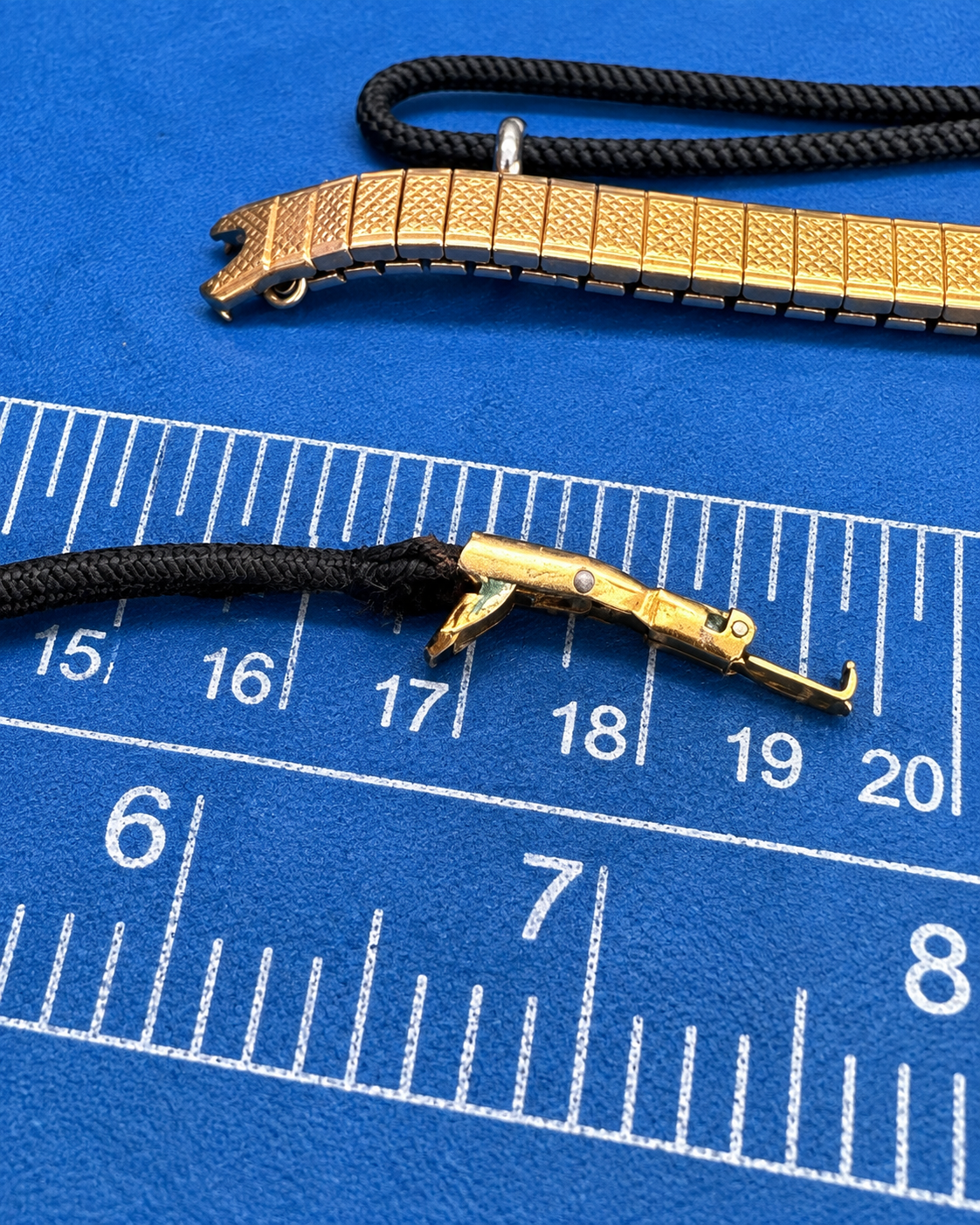
Why I Like Them
The finished bracelet is not complicated.
That is exactly why I like it.
A couple lengths of cord, a few tiny metal fittings, and a clasp completely change the personality of the watch.
The bracelet is light, elegant, and almost invisible. It lets the little Bulova remain the star.
And there is something satisfying about preserving the original hardware instead of replacing the whole thing with something modern.
A Small Piece of Watch History
Corded watch bracelets are easy to overlook.
They are not mechanically sophisticated. They are not famous. They are not the kind of thing collectors usually write books about.
But they tell us something about how women’s watches were designed and worn.
These watches were jewelry first and timekeepers second.
The bracelet was expected to be delicate, decorative, and fitted to the wearer. The watch case became part of the bracelet rather than sitting above it.
That design language has largely disappeared.
Which is probably why I find these so interesting.
Once you know what you are looking at, you start noticing these little corded bracelets on vintage watches everywhere.
And when the cord inevitably fails, you now know that the watch may not be finished at all.
Sometimes it just needs a new bracelet made the old-fashioned way.
Watch the full video
See the full rebuild, the original hardware, the replacement cord, and the finished Bulova in The Forgotten Cordette Watch Bracelet — And How to Make One.
Watch on YouTube Visit the Etsy Shop